Comparing Book Adaptations to Their Holiday Movie Versions
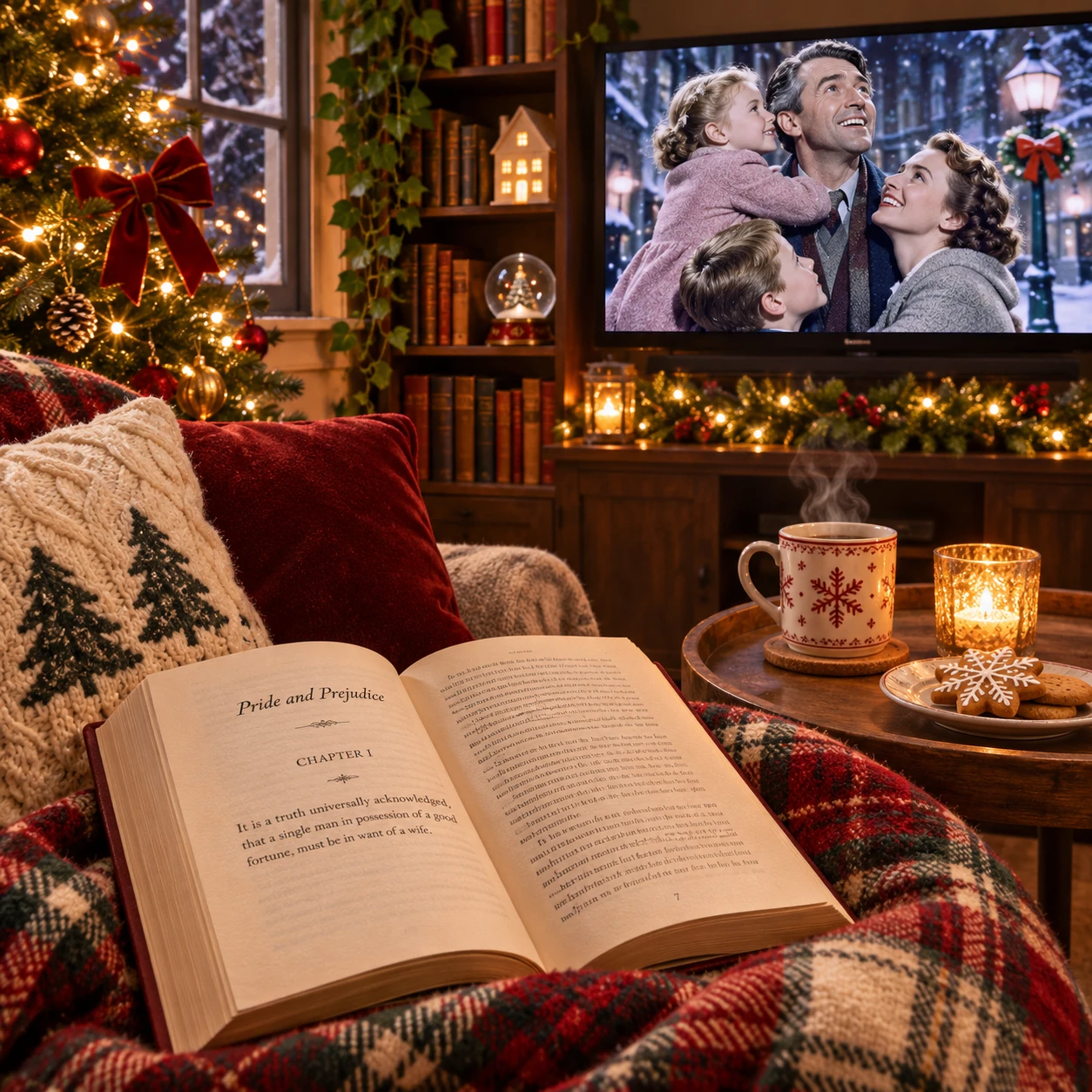
A beloved holiday movie can feel like it has always belonged to the season. Some began on the page, where readers first met characters facing winter, family tension, loneliness, or the hope of a fresh start. Comparing book adaptations to their holiday movie versions shows how directors turn those ideas into images and rituals, and why a changed detail can make a story feel more cinematic without erasing its heart.
Why Holiday Stories Make Popular Adaptations
Holiday stories adapt well because seasonal settings, familiar traditions, and emotionally clear turning points give filmmakers a ready-made atmosphere. A screen adaptation can make a reader’s imagined winter visible while keeping the source book’s themes of connection, generosity, and renewal.
Christmas films often bring people together at a moment when ordinary routines pause. A family gathers, an outsider is welcomed, or a character takes stock of a difficult year. Those arcs are easy to recognize across generations, and the holiday setting gives them a deadline: the celebration is coming, the snow is falling, and something needs to change.
Books can linger over memory, private thought, and small details of daily life. Film communicates those things differently. A crowded dining table, a candle in a dark window, or a familiar song can establish relationships and mood in seconds. Seasonal atmosphere is part of the storytelling, not merely decoration; it can make a familiar moral or family conflict feel immediate.
That ready-made warmth has limits. A film may lean heavily on visual cues such as lights and snow, while a book can explore sadness or uncertainty at greater length. The most effective adaptations use holiday imagery to deepen the story rather than treating it as a substitute for character development.
What Usually Changes from Page to Screen
Holiday movie adaptations usually compress events, simplify supporting plots, and replace written reflection with visual storytelling. These changes help a film fit its runtime, but they can also alter the pace, character development, or emphasis of the source material.
A novel can spend pages following several characters through separate conflicts. A film has less room, so it may merge events, remove a subplot, or give one character a clearer role. The result is often easier to follow on screen, though the story may lose some of the book’s texture.
- Pacing: Long stretches of family life or interior thought become shorter scenes, montages, or dialogue.
- Plot: Side stories may disappear so the main holiday conflict reaches its resolution sooner.
- Characters: A screen version may combine minor roles, change a character’s age, or make motivations more explicit.
- Setting: A film can shift a story to a different place or era to make its visual world and audience more accessible.
- Meaning: A changed ending or emphasized relationship can shift the balance between romance, family, faith, and personal growth.
Film also has tools that prose does not: performance, music, editing, color, and framing. A pause before a character enters a room can carry the weight of a paragraph. But those tools guide interpretation more directly. Readers supply their own mental image; moviegoers see the director’s version.
Comparing the Book and Movie Side by Side
Comparing a holiday book with its film version works best when you look at what each version emphasizes, rather than treating faithfulness as a simple score. A Christmas Carol, Little Women, and The Polar Express show how adaptation can preserve a story’s emotional center while changing its structure or tone.
A Christmas Carol
Charles Dickens’s A Christmas Carol follows Ebenezer Scrooge through visits from supernatural guides, using his past, present, and possible future to make his transformation concrete. Screen versions often preserve that sequence and the movement from isolation to generosity. They can, however, trim narration and supporting details to keep the encounters moving. The visual ghosts make the story’s moral reckoning immediate, while Dickens’s prose gives more room to social conditions and Scrooge’s inner life.
Little Women
Louisa May Alcott’s Little Women opens with the March sisters navigating family life and hardship, including Christmas scenes that establish their care for one another. Film adaptations must select and arrange events from a story that spans years. Some versions shift between time periods, creating a more fluid screen structure; the trade-off is that the book’s gradual sense of growing up may feel less linear. The sisters’ distinct ambitions and family bond remain central, even when the order and emphasis change.
The Polar Express
Chris Van Allsburg’s The Polar Express is a brief, dreamlike picture book built around a child’s nighttime train journey and the question of belief. The film expands that compact premise into a longer adventure, adding encounters and a more developed journey. This gives viewers time to inhabit the snowy world, but it also makes the movie’s tone and suspense more pronounced than the spare book. Both versions rely on wonder; they simply create it at different scales.
These examples show why a scene-by-scene match is not the only measure of success. Ask instead: what did the source make you feel, and what tools does the movie use to reach a similar feeling?
How Adaptations Preserve the Holiday Spirit
Holiday adaptations preserve the spirit of a source book when they carry its emotional themes into recognizable seasonal details. Traditions, relationships, and acts of generosity help a film feel festive while keeping the story connected to its original concerns.
A holiday meal may signal belonging; a gift can reveal how well characters understand one another. Music, decorations, winter weather, and recurring family customs create a sense of shared time. These details matter most when they affect the characters. A celebration that exposes a family’s distance, for instance, can be more affecting than a room simply covered in lights.
Atmosphere and theme should work together. In a story about renewal, a return home or a communal celebration can make change visible. In a tale about generosity, a character’s choice to share what they have gives the festive setting moral weight. The movie may invent a visual motif or repeat a seasonal tradition to unify scenes, even if the book handles the idea through description or dialogue.
Viewers can use a simple three-part lens when comparing versions: tradition (what seasonal ritual anchors the story?), relationship (who draws closer or drifts apart?), and renewal (what changes by the end?). If all three remain recognizable, a film can feel true to the book even after substantial plot changes.
When the Movie Takes a Different Path
A movie takes a different path when its changes better suit the screen’s limited runtime, intended audience, or chosen tone. The key question is whether those changes clarify the central conflict or weaken the themes that made the book memorable.
A film may speed up a romance, give a supporting character more screen time, or create a more decisive ending. Such choices can help audiences follow the story in one sitting. A lighter, family-focused Christmas film might also soften a book’s harsher edges, while a darker adaptation may bring loneliness or social hardship to the foreground.
There is a real trade-off: simplifying a plot improves momentum but can flatten relationships; adding spectacle can make a journey vivid but leave less room for quiet reflection. Neither choice automatically makes the movie better or worse. It changes what the audience notices.
When an adaptation surprises you, compare the effect rather than just the detail. If a character’s decision changes, does the film still support the source’s message about forgiveness or generosity? If the setting moves, does the new place strengthen the holiday atmosphere or make it feel generic? These questions keep criticism grounded in the story, not a tally of differences.
Read the Book, Watch the Movie, or Both?
Read the book for interior detail and room to imagine; watch the movie for performance, music, and visual atmosphere; enjoy both when you want to see how the same holiday story works in two forms. The right order depends on whether discovery or comparison matters more to you.
- Read first if you like noticing what filmmakers cut, rearrange, or reinterpret. You will bring a detailed sense of the characters and themes to the screening.
- Watch first if you prefer to meet the story without knowing its turns. The book can then offer deeper context and new perspectives.
- Choose one if time is short. Pick the format that suits your mood: a film for a shared seasonal evening, or a book for a slower, more private experience.
There is no need to treat the source as the final authority on every creative choice. A movie version can become part of a family’s seasonal tradition, while the book offers a quieter way to return to its characters. Comparing them is most rewarding when you notice both what changed and what endured: a relationship, a moral choice, or the hope that people can begin again.